

Call us now
08045804537

 Send Inquiry
Glycolic Acid
Price 1080 INR/ Liter
MOQ : 25 Liters
Glycolic Acid Specification
- Shape
- Liquid
- CAS No
- 79-14-1
- Ph Level
- 2-3 (typical solution)
- Appearance
- Clear, Colorless
- Poisonous
- NO
- Structural Formula
- HOCH2COOH
- Taste
- Sour, acid taste
- Ingredients
- Glycolic Acid (C2H4O3)
- EINECS No
- 201-180-5
- Refractive Rate
- 1.424 (20C)
- Properties
- Strong organic acid, highly soluble in water, excellent exfoliant, colorless and odorless
- Purity
- 99% Min.
- Molecular Weight
- 76.05 g/mol
- Product Type
- Organic Acid
- Usage
- Used as an exfoliating agent, chemical intermediate, and for skin care formulations
- Molecular Formula
- C2H4O3
- Grade
- Technical Grade
- Density
- 1.27 Gram per cubic centimeter(g/cm3)
- HS Code
- 29121990
- Smell
- Odorless
- Shelf Life
- 24 months from the date of manufacture if stored properly
- Physical Form
- Liquid
- Storage
- Store in tightly sealed container, in a cool dry place away from sunlight
- Solubility
- Miscible with water, soluble in alcohol, ether
- Application
- Cosmetics, chemical peels, textile dyeing, leather processing, cleaning agents
- Melting Point
- 75-80C (pure solid form)
- Hazard Class
- Not classified as hazardous for transport
- Stability
- Stable under recommended storage conditions
- Viscosity
- 1.27 mPa·s at 25°C
- Compatibility
- Compatible with most standard chemical ingredients for formulations
- pKa
- 3.83
- Packaging
- Available in HDPE Drums, Carboys
- Boiling Point
- 100°C (approx. for aqueous solution)
- Precaution
- Avoid contact with eyes and prolonged skin exposure
- Flash Point
- Not flammable (aqueous solution)
Glycolic Acid Trade Information
- Minimum Order Quantity
- 25 Liters
- Payment Terms
- Cash Advance (CA), Cash in Advance (CID)
- Supply Ability
- 2000 Liters Per Month
- Delivery Time
- 5 Days
- Sample Policy
- Contact us for information regarding our sample policy
- Main Export Market(s)
- Asia
- Main Domestic Market
- All India
About Glycolic Acid
Guar Hydroxypropyltrimonium Chloride (GHPTC) is a cationic guar gum derivative used in hair care products for its excellent conditioning, moisturizing, and protective properties. Here's a detailed description and its uses in hair product manufacturing:
Description:
- GHPTC is a white to off-white powder
- Soluble in water and glycerin
- pH range: 4.5-6.5
- High molecular weight
Properties:
- Conditioning: Improves hair softness, smoothness, and manageability
- Moisturizing: Hydrates and locks in moisture
- Protective: Shields hair from damage, breakage, and environmental stressors
- Anti-static: Reduces frizz and flyaways
- Detangling: Facilitates combing and styling
Uses in hair product manufacturing:
1. Shampoos and conditioners: Enhances cleansing, conditioning, and moisturizing properties
2. Leave-in products: Adds nourishment, softness, and protection to hair
3. Styling products: Improves hold, texture, and manageability
4. Hair masks and treatments: Provides intense conditioning, repair, and hydration
5. Color-protecting products: Helps lock in color and moisture
Benefits:
1. Improves hair's overall health and appearance
2. Enhances product performance and user experience
3. Compatible with various hair types and textures
4. Can be used in combination with other ingredients to achieve desired benefits
Typical usage levels:
- Shampoos and conditioners: 0.5-2%
- Leave-in products: 1-5%
- Styling products: 0.5-3%
- Hair masks and treatments: 2-5%
- Color-protecting products: 1-3%
Versatile Application Across Industries
Glycolic Acid serves as a crucial ingredient in personal care, including chemical peels and skin exfoliation products, as well as a chemical intermediate in textile dyeing, leather processing, and cleaning agents. Its strong organic acid nature and miscibility with water make it adaptable for a wide spectrum of industrial and cosmetic formulations.
Highly Stable and Convenient Packaging
Provided in HDPE drums and carboys, Glycolic Acid is stable under recommended storage conditions, ensuring long-lasting quality. Its non-hazardous classification for transport and robust packaging help streamline handling, storage, and logistics for manufacturers and distributors.
Safe Usage and Storage Guidance
While Glycolic Acid is not classified as poisonous and is stable during storage, users should avoid contact with eyes and prolonged skin contact. For optimal shelf life, keep the product in tightly sealed containers, stored in cool, dry areas away from direct sunlight.
FAQ's of Glycolic Acid:
Q: How is Glycolic Acid typically used in cosmetic and industrial applications?
A: Glycolic Acid is widely used as an exfoliating agent in skincare products and chemical peels due to its strong organic acid properties. In industry, it acts as a chemical intermediate for textile dyeing, leather processing, and cleaning agents, benefiting from its high solubility and purity.Q: What are the benefits of using Glycolic Acid in formulations?
A: Glycolic Acid offers excellent exfoliation, improves skin texture, and promotes cell renewal in cosmetic products. In industrial uses, its miscibility with water and strong acidity enhance dye uptake in textiles, and its effectiveness as a cleaning agent aids various processes.Q: Where is Glycolic Acid typically stored and how should it be handled?
A: Glycolic Acid should be stored in tightly sealed containers within cool, dry environments, away from direct sunlight. While it is non-flammable and not classified as hazardous, it is important to avoid direct eye contact and prolonged skin exposure when handling the liquid.Q: When does Glycolic Acid expire and how can shelf life be maintained?
A: When stored properly in a cool, dry, and sealed container away from sunlight, Glycolic Acid retains its quality for up to 24 months from the date of manufacture. Following storage recommendations is essential for maximizing its shelf life.Q: What precautions should be observed during the use of Glycolic Acid?
A: Although Glycolic Acid is not considered poisonous or flammable, it can cause irritation upon contact. Use appropriate protective gear, avoid eye and skin contact, and ensure good ventilation when handling concentrated solutions.Q: Can Glycolic Acid be mixed with other chemical ingredients during formulation?
A: Yes, Glycolic Acid is compatible with most standard chemical ingredients, making it suitable for blending into various formulations for cosmetics, textiles, and cleaning solutions.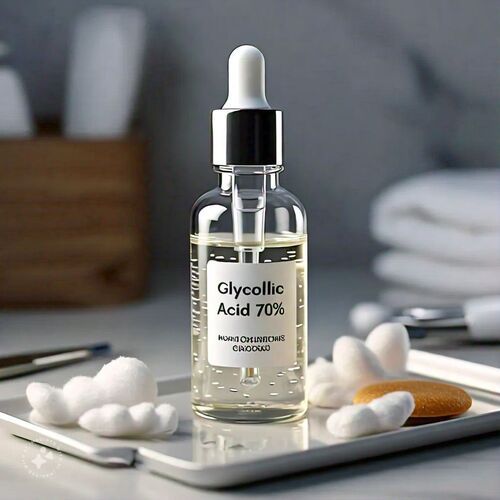
Tell us about your requirement

Price:
Quantity
Select Unit
- 50
- 100
- 200
- 250
- 500
- 1000+
Additional detail
Mobile number
Email

More Products in Industrial Chemicals Category
Dimethicone Chemical
Price 200000.0 INR / Liter
Minimum Order Quantity : 25 Liters
Product Type : Chemical
Physical Form : Liquid
Storage : Other, Store in a cool, dry place, away from direct sunlight
Grade : Industrial Grade
Ethylene Glycol Monostearate Flex (EGMS)
Price 207 INR / Kilograms
Minimum Order Quantity : 25 Kilograms
Product Type : Chemical
Physical Form : Other, Flakes
Storage : Other, Store in cool, dry and wellventilated area in tightly sealed containers
Grade : Industrial Grade
CARBOPOL 940 Chemicals
Price 1200 INR / Kilograms
Minimum Order Quantity : 5 Kilograms
Product Type : CARBOPOL 940 Chemicals
Physical Form : Powder
Storage : Room Temperature
Grade : Industrial Grade
Phenyl Compound
Price 160 INR / Liter
Minimum Order Quantity : 50 Liters
Product Type : Phenyl Compound
Physical Form : Liquid
Storage : Room Temperature
Grade : Industrial Grade

RAVI MARKETING
GST : 24AAIPZ4706C1ZR
GST : 24AAIPZ4706C1ZR
B No. 53, Girivar Glean Industrial Estate, Near-Palm Hotel, Odhav, Ring Road, Ahmedabad - 382415, Gujarat, India
Phone :08045804537

 Send Inquiry
 Send Inquiry
 Send SMS
RAVI MARKETING
All Rights Reserved.(Terms of Use)
Developed and Managed by Infocom Network Private Limited.
Developed and Managed by Infocom Network Private Limited.

